
Dwain Hall told investigators that $4,000 was supposed to be involved. Police traced a $1,200 payment through his roadside-assistance business. But the most disturbing evidence wasn’t the money. It was what Sonia reportedly told a friend after arriving in Florida.
Content warning: This article discusses suicide, coercion, sexual violence, and homicide.
Seven times.
Seven attempts to charge a woman’s bank card in approximately ten minutes. Every attempt declined.
Then a different card worked.
On October 11, 2025, $1,200 went through a roadside-assistance business in Florida.
The business belonged to Dwain Hall.
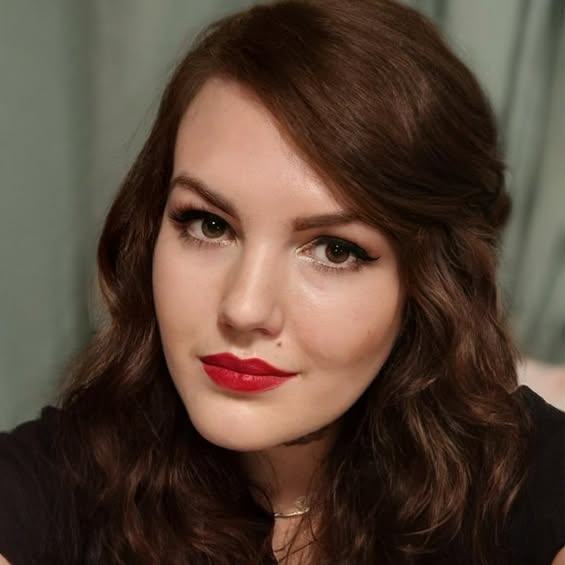
And the woman whose money had just entered his account was Sonia Exelby, a 32-year-old musician who had flown from England to Florida the previous evening.
When investigators began asking Hall about the transaction, he had an explanation. Sonia needed roadside assistance, he said. There had been a problem processing her payment, so he never went out to help her.
Except investigators had evidence that Hall had already picked Sonia up at Gainesville Regional Airport.
He wasn’t a stranger responding to a call about a broken-down car.
He was the man she had traveled thousands of miles to meet.
And as detectives began examining their time together, they uncovered something far more troubling than an unexplained payment.
Sonia had reportedly been sending private messages to a friend.
She was frightened. She was hurt. And she said she couldn’t leave.
Those messages would become some of the most important evidence in the investigation into her death.
This case is featured in Episode 7 of Wait, Explain That?: “Sonia Exelby: The $4,000 Deal and the Messages That Changed Everything.” Heather and Natalie examine Hall’s recorded police interview, the financial trail, Sonia’s messages, and the evidence recovered after she disappeared.
Before Florida, There Was Sonia
Sonia Exelby was the youngest of six children.
Her family called her Lamby.
She grew up surrounded by family in the Portsmouth area of England, and the people who knew her remembered someone who made others feel comfortable being themselves.
She was a musician. She played piano, guitar, and flute, sang beautifully, and taught music to others.
She loved animals and chose to become vegan because, as her family explained, she couldn’t bear the thought of animals suffering.
For nearly 15 years, Sonia shared her life with her partner, Stevie Hunt. They had a cat named Meryl.
Her family remembered her as a devoted aunt, a loving sister, and someone whose gentleness was part of what made her special.
Sonia also struggled with her mental health.
Those difficulties would become central to the investigation, but her family has been clear about something: they do not want the hardest parts of her life to become the only things people remember.
She was loved. She had relationships, talents, routines, and a home.
And in October 2025, people were expecting her to return to that home.
The Online Relationship
Sonia and Dwain Hall had reportedly been communicating for approximately two years after connecting through a fetish website.
Hall used the username “alphasadist.” Sonia reportedly used “Already Yours.”
Their communications included discussions of bondage, suicide, and Sonia’s desire to have someone end her life.
Authorities also learned that in 2024, British police had intervened in an earlier situation involving Sonia’s plans to travel to the United States to meet people who might kill her. She subsequently received treatment.
But Sonia’s family has described another side of her online activity.
Relatives have said she had been looking into men she believed were dangerous to vulnerable women. They believe she may have been manipulated or groomed.
The publicly available evidence does not fully resolve how those accounts fit together. Sonia’s online conversations spanned a long period, and the complete exchanges have not been made public.
What investigators did establish was that Sonia traveled to Florida in October 2025 to meet Hall.
And once she arrived, the evidence began telling a different story.
October 10: What Hall Bought Before Picking Her Up
On Friday, October 10, 2025, Sonia arrived at Gainesville Regional Airport.
Before collecting her, Hall made a shopping trip that would later attract investigators’ attention.
At approximately 5:47 p.m., he purchased rope, paracord, gun cleaner, and deodorizing spray at Walmart.
Minutes later, he returned and purchased a shovel.
By approximately 6:30 p.m., he was picking Sonia up at the airport.
They traveled to an Airbnb in Reddick, Florida, that Sonia had reserved.
At the time, those purchases might have appeared ordinary to anyone watching Hall walk through the store.
But detectives would later find items at the Airbnb that matched his purchases.
And after Sonia’s body was discovered, they would recover a shovel from Hall’s property that they say contained DNA from both Hall and Sonia. A label matching the shovel’s brand was reportedly found near her burial site.
The timing made those purchases especially significant.
They happened before Hall picked Sonia up.
Before the $1,200 payment.
And before the messages that investigators would eventually recover.
October 11: The $1,200 Payment and the $4,000 Question
The following afternoon, a series of attempted transactions went through Hall’s roadside-assistance merchant account.
Seven attempts using Sonia’s Lloyds Bank card failed within approximately ten minutes.
Then a different card belonging to Sonia was successfully charged $1,200.
Investigators traced the money through her British accounts, identifying £950 transferred from Lloyds into Tesco and £905.11 transferred from Tesco to the merchant.
Those transfers were part of the trail leading to the successful payment, not additional payments to Hall.
When detectives first contacted him, Hall described Sonia as a roadside-assistance customer.
He said she had called because of car trouble, but the payment attempts failed, so he never provided the service.
When investigators confronted him with the successful transaction, Hall offered another explanation: a man had provided the second card number over the phone.
But detectives reported finding no phone records supporting the call from Sonia that Hall had described.
Hall eventually acknowledged that no roadside service had been provided to Sonia and that he had already spent the $1,200.
Then, during his recorded police interview, another number entered the story.
Four thousand dollars.
Hall told detectives that the total was supposed to be $4,000. He also discussed money he owed the IRS.
That raises two questions.
What did Hall believe the $4,000 was supposed to cover?
And why was the payment investigators could actually trace only $1,200?
The distinction matters. The financial records establish the payment through Hall’s business. The larger amount comes from Hall’s own explanation to police; it does not independently establish an agreement with Sonia.
But detectives were no longer investigating only a questionable transaction.
They were trying to find a missing woman.
And the evidence recovered from Hall’s phone would make the case far more disturbing.
The Video and the Messages Sonia Sent
Investigators recovered a video from Hall’s phone that had reportedly been deleted.
The video showed Sonia with visible injuries and bruising. Hall was reportedly questioning her about dying and urging her to agree to being stabbed.
Investigators also described recordings and a letter Sonia was allegedly pressured to create.
But there was another set of communications.
Private messages Sonia had reportedly sent to a friend through Discord.
Those messages described fear, pain, and regret.
In one reported exchange, Sonia said she was scared and in significant pain. Other messages described her phone being taken and her feeling unable to leave.
One account described her attempting to communicate while Hall was showering, despite having a poor signal.
These messages are central to understanding the case.
Because much of the attention surrounding Sonia’s death has focused on why she traveled to Florida in the first place.
Investigators believe she had previously discussed wanting someone to kill her.
But what she may have said before traveling cannot automatically explain what she was experiencing once she arrived.
Someone can agree to meet another person and later withdraw consent. Someone can express a desire to die and later want to live.
And investigators say Sonia was communicating that she was afraid, hurt, and unable to leave.
Those statements are not erased by the circumstances that brought her to Florida.
October 12: Two Very Different Realities
On Sunday, October 12, Hall purchased a plastic tarp at a Lowe’s in Ocala.
Investigators later placed his phone near a wooded area in Marion Oaks for approximately an hour.
That location would become significant days later.
Across the Atlantic, Sonia’s loved ones were dealing with something entirely different.
They couldn’t find her.
Hampshire and Isle of Wight Constabulary received a missing-person report on October 12.
Sonia was supposed to return to England on October 13.
She didn’t make her flight.
British authorities contacted investigators in Florida, and the search began to focus on the man she had traveled to meet.
Stevie was asking the public for help.
On October 16, he shared a missing-person appeal with Sonia’s photographs and a description of her appearance.
He signed it with love from himself and Meryl, their cat.
It was a small, painfully ordinary detail.
Their cat was still at home. Stevie was still searching. The people who loved Sonia were still hoping she would walk through the door.
Meanwhile, investigators were examining a financial transaction, phone records, surveillance footage, and Hall’s explanations of what happened after Sonia arrived.
And those explanations kept changing.
The Different Stories Hall Told Investigators
Hall initially said he didn’t know Sonia.
She was a roadside-assistance customer, he explained, and he hadn’t gone out to help her.
Then he acknowledged picking up a woman at Gainesville airport, but claimed he had only driven her to the Airbnb.
Later, he admitted knowing Sonia but suggested he had been away working for a man named Harold while she stayed at the rental.
Eventually, Hall acknowledged staying with Sonia and having sex with her.
He claimed she left the Airbnb on October 12 in a Cadillac Eldorado with unidentified people.
Detectives tried to corroborate that account.
They searched Marion County vehicle-registration records covering a three-month period and found no Cadillac Eldorado. That search could not exclude every vehicle registered elsewhere, but it did not support the account Hall had given.
His changing stories were only part of what troubled investigators.
During questioning, Hall also raised a hypothetical involving violence toward Sonia and Alligator Alley, a location unrelated to where her remains were eventually found.
And when a detective directly asked whether he had killed Sonia, the investigator wrote that Hall indicated he couldn’t answer.
That response was not a confession.
But detectives had more than Hall’s words.
They had the airport pickup, the purchases, the money, the phone-location evidence, and the communications Sonia had reportedly sent.
Those records were beginning to converge on one place.
A wooded area in Marion Oaks.
October 17: The Search Ends in the Woods
On October 17, 2025, investigators found human remains buried in a shallow grave in Marion Oaks, Florida.
The remains were later identified as Sonia Exelby’s.
An examination conducted the following day determined that she had suffered four sharp-force injuries. Her death was ruled a homicide.
The burial location was near the area where Hall’s phone had reportedly been tracked on October 12.
Hall had given investigators an explanation for being there. He claimed he had parked in the area for approximately an hour because he was hiding from someone following him.
Investigators reported they could not substantiate his broader account.
The shovel recovered from Hall’s property became another important piece of evidence. Detectives connected it to Sonia through biological evidence, and a label matching its brand was reportedly found near the burial site.
On October 18, investigators also recovered Sonia’s bag from a donation bin in Gainesville.
Who placed it there has not been established publicly.
Hall was initially arrested on financial charges on October 17.
The murder and kidnapping charges would come later.
But before his arrest, investigators say Hall had already sent something out of Florida.
And what they eventually recovered from that shipment would become another major piece of the case.
The Package Marked “Sterling Silver”
On October 14, while Sonia was missing, Hall mailed a package to an acquaintance in Ohio.
The shipping declaration listed the contents as sterling silver.
Investigators say the package contained something else.
A knife and a bracelet.
Forensic testing described in the homicide investigation identified Sonia’s blood on the knife.
The bracelet also became part of the forensic examination. Reports differ in how precisely they describe its DNA findings, so the most important distinction is that the knife was reported to contain Sonia’s blood, while the bracelet’s DNA findings require separate consideration.
Investigators recovered the items in Ohio on October 31.
They also examined communications involving Hall and the Ohio acquaintance, along with a recorded jail call involving Hall’s partner, Ginger Stein.
During that call, Hall reportedly referred to a package that would arrive from a friend months later.
The evidence does not establish that the person in Ohio knowingly participated in Sonia’s death or knew what the package contained.
But consider the sequence.
On October 14, Sonia had already missed her return flight.
Her family was looking for her.
Investigators were trying to establish where she had gone.
And Hall reportedly mailed a package out of state that authorities later said contained a knife with Sonia’s blood on it.
That discovery added another troubling question to an investigation already filled with them.
What Sonia’s Family Wants People to Remember
When Sonia’s family released a public tribute in July 2026, they spoke about the woman they knew.
Not just the circumstances of her death.
They remembered the way she made others feel accepted. Her musical talent. Her compassion. The close relationship she shared with her siblings, particularly her sister Sara.
They remembered her as the youngest of six, the sister whose presence helped hold the family together.
Stevie has also honored Sonia through fundraising for Cats Protection, reflecting her lifelong love of animals.
And as Hall’s trial approached, her family began raising funds to travel from England to Florida.
They explained that attending the proceedings would be emotionally difficult, but they wanted to be there for Sonia and support one another.
It is easy for a case like this to become a collection of disturbing details: the online messages, the shopping receipts, the money, the shovel, the package.
But behind every one of those details was a person whose family still lives with her absence.
Sonia was 32 years old.
She had people who loved her and expected her home.
Where the Dwain Hall Case Stands
Dwain Hall has pleaded not guilty to first-degree murder and kidnapping in connection with Sonia’s death.
As of November 2, 2026, a pretrial hearing was scheduled for November 3 in Marion County, Florida, and jury selection was scheduled for November 16. Those dates are subject to change.
At an April 2026 hearing, prosecutors said a life-imprisonment plea offer was on the table. That does not mean Hall accepted it.
The case remains pending, and Hall is presumed innocent unless proven guilty.
The evidence prosecutors may present raises serious questions about the financial transactions, Hall’s explanations, the physical evidence, and the messages Sonia sent after arriving in Florida.
But one question should not overshadow everything else.
Why Sonia boarded the plane is part of this story.
What happened to her after she arrived is the heart of it.
And whatever the full evidence ultimately establishes, Sonia deserves to be remembered for more than the way she died.
She was a musician. A partner. A sister. An aunt. An animal lover.
Her family called her Lamby.
She deserved to come home.
Listen to the Full Investigation: Wait, Explain That? — Episode 7
Sonia Exelby: The $4,000 Deal and the Messages That Changed Everything
Why did Dwain Hall tell investigators the amount was supposed to be $4,000 when the payment they traced was $1,200? What do Sonia’s messages reveal about her time in Florida? And why did investigators recover a knife from a package mailed to Ohio?
In Episode 7 of Wait, Explain That?, Heather and Natalie follow the evidence, examine Hall’s recorded police interview, and explore the unanswered questions surrounding Sonia’s death.
Listen to the full episode on Spotify, Apple Podcasts, or YouTube, and follow Wait, Explain That? for updates as the case moves through the courts.
[Insert Episode 7 player or direct listening link here.]
Sources
- Florida Department of Law Enforcement — Arrest announcement, November 17, 2025
- Hampshire and Isle of Wight Constabulary — Sonia Exelby’s family tribute
- FOX 35 Orlando — Investigative timeline and homicide-affidavit evidence
- Court TV — April 22, 2026 hearing and trial scheduling
Last updated November 2, 2026. This article describes allegations and evidence in a pending criminal case. Trial scheduling and case status may change.


Leave a Reply