
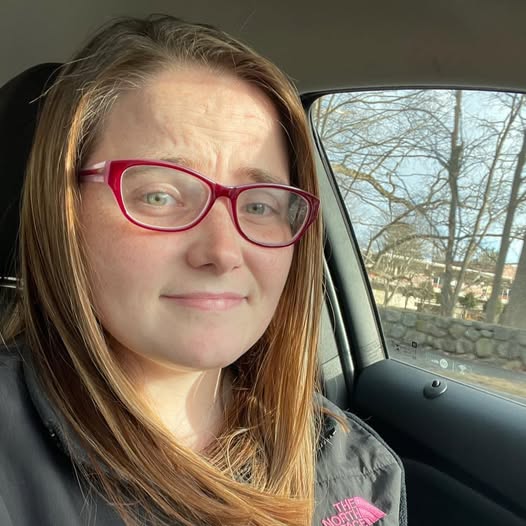
She joined a Massachusetts police youth program dreaming of becoming an officer. Prosecutors say one of her mentors began sexually abusing her at 15. Years later, as she prepared to become a mother, she was found dead in an apartment investigators initially believed was the scene of a suicide. Now a federal murder trial is exposing the relationships, warnings and decisions that shaped Sandra Birchmore’s life—and the unanswered questions about why she wasn’t protected.
Sandra Birchmore was planning a Valentine’s Day announcement.
She was 23, pregnant with her first child, and already imagining what life would look like when her son arrived. She had been researching baby supplies, scheduling prenatal appointments, thinking about newborn photographs and discussing names. Friends recalled how openly she talked about becoming a mother. One described her excitement as something almost impossible to contain.
Her own mother had raised her largely on her own. Sandra believed she could do the same.
But Sandra never got to make that announcement.
On February 4, 2021, police entered her apartment in Canton, Massachusetts, after she failed to show up for work. They found her dead, a strap from a duffel bag around her neck and attached to a closet door handle. She was approximately eight to ten weeks pregnant.
Her death was ruled a suicide.
For more than three years, no one was criminally charged with killing her. During that time, investigators uncovered a history of sexual relationships involving Sandra and officers from the Stoughton Police Department, the very institution she had joined as a child because she wanted to become a police officer.
One of those officers was Matthew Farwell.
Sandra had met him through the department’s Police Explorers program when she was 12. Federal prosecutors allege that he began sexually abusing her when she was 15 and continued the relationship into adulthood. They now accuse him of strangling Sandra on February 1, 2021, and staging her death to resemble suicide because he feared she would expose what had happened between them.
Farwell has pleaded not guilty. His defense maintains that Sandra took her own life.
As his federal trial unfolds in Boston, jurors are hearing evidence about a relationship that began when Sandra was a child, a pregnancy that threatened to expose long-held secrets, and a death investigation whose original conclusion has since been changed.
But Sandra’s story is larger than the murder charge.
It is also about the adults who entered her life through positions of authority, the people who later learned troubling things about those relationships, and the institutions that did not fully confront what was happening until after she was gone.
A girl who believed the police were her future
Sandra was born in May 1997. She grew up in Massachusetts and developed an interest in law enforcement early in life.
In March 2010, just before her thirteenth birthday, she applied to join the Stoughton Police Explorers. The program introduced young people to police work through instruction, activities and mentorship from officers.
For Sandra, it offered more than a glimpse of a possible career. She had experienced considerable loss and instability in her family life. The program gave her a place to belong and adults she could look up to.
Her mother believed in it, too.
Years later, investigators would find correspondence expressing the family’s appreciation for the officers who had taken an interest in Sandra. Among the records was a letter bearing the title My Hero Lieutenant Devine, referring to Robert Devine, a longtime figure in the Explorers program.
That detail is difficult to separate from what investigators eventually uncovered. Sandra and her family were placing their trust in men who carried badges, supervised children and represented an institution built around public protection.
The program also had a history that connected the adults who would later become central to Sandra’s case.
Robert Devine had overseen the Explorers for years. Matthew Farwell and his twin brother, William, had themselves been associated with the program before becoming police officers. Sandra entered an environment where those relationships and loyalties were already established.
Matthew became a sworn Stoughton officer in 2012. By then, Sandra had been participating in the program for roughly two years.
Federal prosecutors say he used his access to her as an instructor and mentor to develop an increasingly personal relationship. He communicated with her outside the program and allegedly arranged opportunities to spend time with her.
In April 2013, according to federal investigators, that relationship became sexual.
Sandra was 15.
Matthew was 27.
That date has become one of the most consequential pieces of evidence in the federal case. Investigators recovered messages in which Sandra and Farwell discussed their first sexual encounter and referred to April 10, 2013. Prosecutors argue that the exchange corroborates her account that the relationship began while she was legally unable to consent.
It is not simply the age difference that makes the allegation so serious. Farwell was an adult police officer who had access to Sandra because she was participating in a youth program. He was someone she had been encouraged to regard as a mentor.
The relationship, prosecutors allege, continued for years.
Sandra would eventually become an adult, move into her own apartment and make decisions about her personal life. But those later years did not erase the circumstances in which the relationship allegedly began.
A child had entered a police mentorship program. An officer responsible for maintaining appropriate boundaries allegedly crossed them.
And for years, the full extent of that relationship remained outside public view.
The other officers
After Sandra died, Stoughton Police launched an internal affairs investigation that eventually examined the conduct of three officers: Matthew Farwell, his twin brother William Farwell, and former deputy chief Robert Devine.
The investigation did not establish that all three men sexually abused Sandra when she was a child. That distinction is important.
Federal prosecutors specifically allege that Matthew began sexually abusing Sandra at 15.
William acknowledged having a sexual relationship with Sandra when she was an adult. Investigators examined sexually explicit communications and other material involving the two, along with evidence of improper law enforcement database searches. William disputed aspects of the department’s findings and resigned in August 2022.
Devine denied having a personal relationship with Sandra. The internal investigation nevertheless found evidence of inappropriate conduct and concluded that he had been dishonest in responding to investigators. He retired in August 2022 while disputing the fairness of the inquiry.
The department’s findings raised questions that went beyond the private conduct of individual officers.
How had Sandra, who joined the Explorers as a child, become sexually involved with multiple men connected to the same police department? What did the men know about one another? What had supervisors observed? Were there warning signs during her teenage years that should have prompted an intervention?
The investigative records provide pieces of the answer, but not a complete accounting of every person’s knowledge.
In November 2021, months after Sandra’s death, Stoughton investigators reviewed electronic material recovered from her laptop. They identified communications involving Matthew, William and a military recruiter, as well as photographs and videos that warranted additional examination.
Investigators also searched archived Explorers records, some of which had been kept in boxes from the years when Devine oversaw the program.
The records connected the officers and Sandra through an institution that had existed long before anyone publicly questioned the relationships.
In September 2022, Police Chief Donna McNamara announced the internal investigation’s findings and called for the three former officers to lose their law enforcement certifications.
The department’s public acknowledgment was significant. It was also painfully late for Sandra.
She had been dead for more than a year.
And although the findings exposed serious misconduct, they did not immediately establish how she died.
Sandra’s life outside the police department
The records of Sandra’s relationships with police officers are extensive. The surviving details of her life outside those relationships are just as important.
Sandra attended Massasoit Community College. She explored a military career and briefly entered Army basic training before returning home because of medical issues. Later, she worked with children as an instructional assistant in the Sharon public school system.
She played pickup volleyball and maintained friendships dating back to childhood. She loved her cats. People who knew her described someone outgoing, affectionate, direct and sometimes persistent when she wanted an answer.
Her longtime therapist, Diala Alkhalil, began seeing her when Sandra was approximately 10 or 11. Sandra returned to treatment during later periods of grief and anxiety, particularly after the deaths of her mother and grandmother.
Those losses affected her deeply.
Sandra had a history of emotional distress and had sought professional help. At trial, her mental health history has become a central issue because the defense argues that she died by suicide.
But the testimony also reveals a young woman who actively sought support. Alkhalil described Sandra as engaged in treatment, willing to communicate when she was struggling, and generally reliable about attending appointments.
Her friends remembered her excitement about pregnancy. Her therapist recalled her concern about becoming a mother without her own mother and grandmother there to share the experience.
Sandra’s life contained grief, difficult relationships and mental health challenges. It also contained friendships, work, ambitions and plans.
Those realities can exist together.
The question before the federal jury is not whether Sandra ever experienced depression or anxiety. It is whether the evidence proves that Matthew Farwell killed her.
The recruiter who knew about the past
In December 2019, Sandra began communicating with Jason Pickard, an Army recruiter.
She was 22 at the time. Pickard was married and had children.
Their relationship became sexual and continued intermittently until Sandra’s death. Pickard later testified that he was not formally serving as her recruiter, although he acknowledged that relationships involving military recruiters and potential recruits could violate military rules.
He described Sandra as outgoing and direct. She spoke to him about her family, her grief and her complicated relationship with Matthew Farwell.
Eventually, according to Pickard’s October 22, 2026, testimony, Sandra told him that her relationship with Farwell had begun when she was underage.
She described losing her virginity to the officer when she was approximately 15 or 16.
Pickard testified that he encouraged her to report the alleged abuse. But he did not report it himself.
When prosecutors asked why he had remained silent, he described his fears about his marriage, his children and his military career. He also said he had respected Sandra’s request not to disclose the relationship.
He testified under a grant of federal immunity, and the judge instructed jurors to consider whether that arrangement could affect his testimony.
Pickard’s account introduces one of the most uncomfortable questions in the case.
Sandra reportedly told another adult that a police officer had begun having sex with her when she was a child. That adult recognized the seriousness of what she was describing, but no report followed from him.
There are limits to what can be concluded from that decision. The testimony does not establish what intervention would have been possible or what Sandra herself wanted authorities to do at the time.
But it demonstrates that the allegation about Farwell’s conduct was not discovered only after Sandra’s death.
She had told people.
And some of those people understood that what she described was wrong.
A pregnancy, a secret and a disputed father
In late 2020, Sandra learned she was pregnant.
She believed Matthew Farwell was the father.
According to prosecutors, Farwell had agreed to try to conceive a child with Sandra during a period when she was threatening to expose their relationship. The government alleges that his apparent cooperation was an effort to prevent disclosure, not a genuine commitment to having a child.
When Sandra told him she was pregnant and intended to keep the baby, prosecutors say his reaction changed dramatically.
Messages cited in federal court documents show anger and hostility. Sandra told friends about arguments and behavior that frightened her.
One friend testified that Sandra described Farwell being physically aggressive toward her stomach during sex after he learned about the pregnancy. Another recalled Sandra describing a confrontation in which he screamed at her and made a statement wishing her dead or suggesting she kill herself.
Those accounts are testimony about what Sandra told other people, not independent eyewitness observations of every alleged incident. They are nevertheless important to the prosecution’s account of the deteriorating relationship.
Sandra continued preparing for motherhood.
She researched baby supplies, arranged prenatal appointments and considered a public announcement for Valentine’s Day. She expected financial support from the man she believed was the father and discussed the possibility of pursuing child support.
Then came a revelation that neither Sandra’s friends nor much of the public knew when she died.
Matthew Farwell was not the biological father.
DNA testing performed during the federal investigation identified Jason Pickard as the father of Sandra’s unborn son.
On October 22, 2026, Pickard testified that he learned the truth only after providing a DNA sample to the FBI in 2025.
He said Sandra had repeatedly assured him that Farwell was the father. He had wondered whether the child could be his, but testified that she never told him he was the father.
The defense challenged that account, pointing to communications that could suggest Sandra had discussed secrets with Pickard shortly before her death. Pickard said he did not remember every conversation and maintained that Sandra had not identified him as the father.
The biological finding is established. What Sandra, Farwell and Pickard each believed at particular moments remains important to the competing accounts of the case.
Prosecutors contend that Sandra and Farwell believed he was the father and that he feared the pregnancy would expose their relationship.
The defense disputes that theory and maintains that Farwell believed he was not the father.
The DNA result does not resolve that disagreement. It establishes who fathered the baby, not what anyone knew in February 2021.
The call that reached Stoughton police
On January 20, 2021, a woman contacted the Stoughton Police Department about Sandra’s relationship with Matthew Farwell.
Dispatcher James Fitton testified during the federal trial that he informed Farwell about the call.
According to Fitton, Farwell reacted angrily and told him never to discuss the matter again. Fitton also said a supervisor instructed him to forget about the complaint.
The prosecution has presented that incident as part of the pressure Farwell was experiencing shortly before Sandra died.
But the exact content of the call matters.
Under questioning, Fitton said he did not remember the caller specifically alleging that Farwell had begun having sex with Sandra when she was a minor. He also did not recall the caller reporting a particular crime.
The evidence therefore does not establish that the dispatcher knowingly ignored a report of child sexual abuse.
What it does establish, according to his testimony, is that concerns about Farwell’s relationship with Sandra reached the police department and that Farwell was made aware of them.
Other colleagues testified about changes in his behavior around the same period.
Detective Daniel Barber described Farwell as distracted and preoccupied. When asked what was happening, Farwell reportedly referred to trying to put a difficult situation back under control.
The meaning of those remarks is disputed. But their timing matters to the prosecution’s theory.
Sandra was pregnant. Their relationship was increasingly contentious. People around them were asking questions.
And Farwell knew that someone had contacted his department.
The visits that frightened Sandra
Federal charging documents describe conduct in the final weeks of Sandra’s life that has received less attention than the surveillance footage from February 1.
Prosecutors allege that Farwell visited her apartment approximately a week before her death and asked for a spare key, while instructing her to keep the arrangement secret.
During another visit, according to the federal affidavit, he looked through areas of the apartment, including closets and the bathroom.
Sandra reportedly told others that the behavior made her uncomfortable.
The government argues that these visits were part of Farwell’s preparation for the killing. The defense disputes the murder allegation, and the purpose of the visits has not been established as fact.
Still, the detail becomes important when placed beside the circumstances in which Sandra was later found.
Her body was discovered suspended by a strap attached to a closet door handle.
Prosecutors allege that Farwell had examined the apartment before returning on February 1.
The case does not depend on that circumstance alone. But it is one of the pieces of evidence the government asks jurors to consider when evaluating whether Sandra’s death was staged.
Twenty-nine minutes
On the evening of February 1, 2021, a snowstorm was affecting Massachusetts.
Surveillance footage from Sandra’s apartment building shows a person prosecutors identify as Matthew Farwell entering at approximately 9:14 p.m.
He was wearing a hooded sweatshirt and a face covering.
Witnesses who knew Farwell testified that he had been strongly opposed to wearing masks during the COVID-19 pandemic. Prosecutors highlighted that contrast. The defense has argued that the covering could be explained by his desire to conceal an extramarital relationship.
The person seen in the footage left approximately 29 minutes later.
Investigators testified that the final recorded movement of Sandra’s phone occurred around 9:40 p.m., shortly before the departure shown on video.
Farwell has acknowledged visiting Sandra that night. His attorneys maintain that he ended their relationship and left her alive.
Federal prosecutors allege that he strangled her during the visit and staged the apartment to make it appear that she had taken her own life.
The difference between those accounts is the central question in the trial.
The surveillance footage places Farwell at the building. It does not independently show what happened inside the apartment.
The prosecution relies on that timeline alongside the communications, forensic evidence, alleged motive and witness testimony. The defense challenges the inferences prosecutors ask jurors to draw.
Three days later, Sandra’s coworkers became concerned when she failed to appear for work.
Police entered her apartment and found her dead.
She was 23.
Her son never had the chance to be born.
Why investigators initially believed it was suicide
Sandra’s death was investigated by Canton police and Massachusetts State Police personnel working with the Norfolk County District Attorney’s Office.
The original investigation considered the scene, the medical examiner’s findings and information about Sandra’s mental health history.
The medical examiner classified the death as suicide.
That conclusion became the official account even as people close to Sandra questioned whether she would have taken her own life.
Some friends described her excitement about becoming a mother. Others recalled troubling things she had told them about Farwell. The original investigators also had information placing him at her apartment shortly before her death.
Those circumstances did not initially result in homicide charges.
The later federal investigation reexamined existing evidence and developed additional information. A forensic pathologist retained by Sandra’s family concluded in 2024 that the death was a homicide staged to resemble suicide.
That opinion was not the state’s official determination.
In May 2026, Massachusetts changed Sandra’s official manner of death from suicide to undetermined. The change did not classify her death as homicide.
The medical evidence remains contested, and the federal trial is examining the basis for the competing conclusions.
The distinction is important. A medical examiner’s finding and a jury’s determination of criminal guilt are different decisions, reached under different standards.
But the history of the case raises questions that extend beyond the eventual verdict.
What weight did the original investigators give to Sandra’s mental health history? How thoroughly were the relationships with Stoughton officers examined? What did investigators know about the alleged abuse beginning in adolescence? Which forensic findings were reconsidered, and which evidence became available only later?
The answers matter because Sandra’s death was initially understood through one explanation while a much larger history of alleged exploitation remained incompletely examined.
What the jury is hearing in October 2026
Matthew Farwell’s federal trial began on October 9, 2026, in Boston.
He faces charges of killing a witness or victim and causing the death of a child in utero. Prosecutors allege that he killed Sandra to prevent information about possible federal crimes from reaching law enforcement.
Those alleged underlying crimes include coercion and enticement involving a minor, deprivation of rights under color of law, and fraud related to being paid for police duty while allegedly meeting Sandra for sexual activity.
The jury has heard evidence about thousands of communications between Sandra and Farwell, including messages prosecutors say corroborate the beginning of their sexual relationship when she was 15.
Investigators also presented evidence suggesting that Farwell met Sandra for sexual encounters while on duty, including at her homes and in parking lots.
Prosecutors argue that the relationship was sustained through grooming and exploitation of authority. The defense has emphasized Sandra’s adult participation in the relationship and challenged the reliability of some of her statements to friends.
Jurors have heard testimony about Farwell’s other extramarital relationships. Prosecutors have used those accounts to compare his behavior with other women to his conduct around Sandra. The defense has offered alternative explanations for the differences.
The forensic evidence is another major point of contention.
On October 22, Massachusetts State Police forensic scientist Elizabeth Duval testified about DNA testing involving Sandra’s fingernails, underwear and the strap found around her neck.
Farwell was excluded as a contributor to the DNA recovered from beneath Sandra’s fingernails. DNA associated with both Farwell and Pickard was identified on her underwear.
Duval also testified that Farwell’s DNA was included in a mixture recovered from the ligature. That mixture contained DNA from four contributors, and the remaining contributors could not all be identified.
The defense questioned the possibility of DNA transfer. Duval acknowledged that determining how DNA was transferred was outside her area of expertise.
The findings therefore require careful interpretation. DNA can help establish contact with an object, but its presence alone does not establish when contact occurred or prove how a death happened.
The jury must evaluate those findings alongside the other evidence.
The therapist’s final appointment
One of the most personal moments of the trial came on October 23, when Sandra’s longtime therapist testified.
Diala Alkhalil had known Sandra since childhood. She described years of treatment, periods of grief and anxiety, and Sandra’s efforts to seek help when she needed it.
She also recalled their final appointment on January 31, 2021.
It was the day before prosecutors allege Sandra was killed.
Alkhalil testified that Sandra was doing well and that she had not observed suicidal ideation during the visit.
Sandra had been anxious about her pregnancy and her relationship with Farwell. She was also grieving the fact that her mother and grandmother would never meet her baby.
During the session, Sandra described a dream in which her deceased mother appeared holding her unborn child. She was frightened that something might happen to her.
The therapist did not interpret the experience as a hallucination.
Alkhalil also described Sandra’s attachment to her cats, her willingness to communicate when distressed, and her active participation in treatment.
Her testimony did not erase Sandra’s documented history of emotional difficulties. It placed that history alongside her condition during the final days of her life.
The defense is entitled to challenge the therapist’s observations and present evidence supporting its suicide theory. The prosecution argues that the final appointment and Sandra’s preparations for motherhood are inconsistent with that explanation.
The therapist was expected to return for further testimony when court resumed on Monday, October 26.
As of October 25, the prosecution had not finished presenting its case. No verdict had been reached.
The accountability that came after her death
The public investigation into the Stoughton officers’ conduct unfolded largely after Sandra was gone.
Matthew Farwell left the department in 2022. William Farwell resigned that August. Robert Devine retired later the same month.
In September 2022, the department publicly announced its internal findings. Chief Donna McNamara said the three men had violated the standards expected of police officers and called for their decertification.
The findings were important, but they also demonstrated how long the relationships and alleged misconduct had gone without a full public accounting.
Sandra had joined the Explorers in 2010.
Prosecutors allege that Matthew began sexually abusing her in 2013.
She died in 2021.
The internal findings were announced in 2022.
Federal murder charges followed in August 2024.
The prosecution now underway is examining conduct that allegedly began more than thirteen years ago.
There are still significant unanswered questions about what supervisors knew during Sandra’s adolescence, what other officers knew about the relationships, and whether earlier concerns were properly investigated.
There is also a distinction between professional misconduct and criminal responsibility. The internal investigation’s findings about William Farwell and Robert Devine do not establish that either man participated in Sandra’s death. Neither is on trial for her murder.
And while multiple people reportedly knew aspects of Sandra’s history, the available evidence does not establish that all of them possessed the same information or had identical opportunities to intervene.
That makes the institutional questions more difficult, not less important.
A child entered a police program because she admired law enforcement. Years later, the department discovered serious misconduct involving men who had been part of that environment. The person at the center of the investigation was no longer alive to explain, in her own words, what she had experienced or what she had wanted from the adults around her.
The life Sandra was preparing to live
The federal jury will ultimately determine whether prosecutors have proved that Matthew Farwell killed Sandra Birchmore and her unborn son.
It cannot undo the years of alleged exploitation. It cannot return the time between her death and the criminal charges. And it cannot give Sandra the opportunity to make the announcement she had been planning.
That planned Valentine’s Day announcement is one of the details preserved in the federal court record.
Sandra had been thinking about how to introduce her baby to the world. She was researching photographs, appointments and the practical details of becoming a parent. Her friends remembered the happiness she expressed, even as she worried about raising a child without her own mother there to guide her.
At 12, Sandra had imagined a future wearing a police uniform.
At 23, she was imagining a different future, one that involved holding her son.
The people who knew her described someone who could be funny, persistent, affectionate and deeply determined to build a family of her own. Her life was not defined entirely by the men now being discussed in a federal courtroom.
But those men, and the institutions around them, became central to the investigation that followed her death.
The criminal case may establish whether one officer murdered her. The larger record asks something that a murder verdict alone cannot fully answer: how a young girl could enter a police mentorship program with so much trust, and why the warning signs surrounding her relationships with adults in positions of authority did not produce meaningful accountability while she was still alive.
Sandra Birchmore never got to introduce her son to the world.
More than five years after her death, the people investigating what happened to her are still uncovering the history she lived through before that final night.
And the questions about who knew, who acted and who remained silent have not all been answered.
Reporting status: October 25, 2026. Matthew Farwell has pleaded not guilty and is presumed innocent unless proven guilty. The trial remains ongoing. Allegations in federal charging documents, internal administrative findings, witness testimony and established forensic findings are distinguished throughout this article. Additional testimony and rulings may change the evidentiary record.
Sources:
FBI detention affidavit, August 28, 2024 — The original 45-page federal investigative affidavit describing the alleged grooming, relationship, police-duty encounters, final visits and homicide theory.
Detention Affidavit
United States v. Matthew Farwell — DOJ case page — Original and superseding indictments and official prosecution materials.
United States v. Matthew Farwell
Stoughton Police internal affairs investigative findings — Original administrative investigative record, including recovered communications, archived Explorers documents and officer interviews.
Crime Timelines
Boston.com — October 22 trial testimony — Jason Pickard’s testimony, forensic DNA evidence and testimony from Sandra’s friends.
Boston.com
NBC Boston — October 23 therapist testimony — The latest verified testimony available through Friday.
NBC Boston
WBUR — Trial background and competing theories — An overview of the prosecution and defense positions.
WBUR News
Federal court memorandum and order, January 23, 2026 — An original court order identifying the two charges and the standards governing the criminal case.
GovI


Leave a Reply