
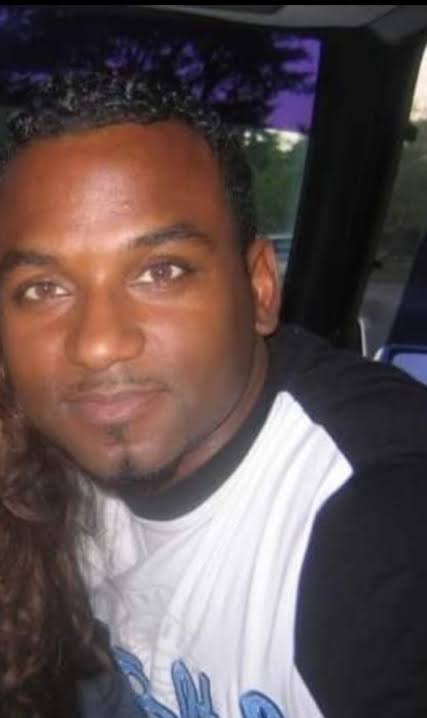
The British father was found inside a ransacked property in Grenada. A pathologist concluded he had been tortured and killed. But authorities closed the criminal investigation, and a disturbing account emerged suggesting police believed he had inflicted his own injuries. Nearly ten months later, the evidence, the official conclusions and the government’s response still leave his family searching for answers.
By Wait, Explain That? | November 2, 2026
Trigger warning: This article discusses violent death, torture and disturbing post-mortem findings.
Andrew Frederick’s grandmother called him her “right hand.”
She described him as loving, kind and genuine. When she spoke about his death, she struggled to understand who could have done something so terrible to someone she loved.
Andrew was 47 years old. He was a father, a son and a grandson with deep family roots in Grenada. A British national whose parents were Grenadian, he worked as a property manager on the island.
He had a daughter who would now have to grow up without him. He had relatives who depended on him and a family who expected him to be part of their lives for years to come.
On Friday, January 2, 2026, Andrew’s family spoke with him.
When they tried calling the next day, he didn’t answer.
By Sunday, January 4, they were worried enough to ask someone to check on him.
Andrew was found dead on the floor inside a property in Lance Aux Epines, an affluent area in southern Grenada.
What investigators reportedly found inside that property raised immediate concerns about violence. Doors appeared to have been forced open. Belongings were scattered. There were reports of different footwear impressions near Andrew’s body.
Then came the medical findings.
Professor Hubert Daisley, a pathologist from Trinidad and Tobago, examined Andrew and concluded that his death was a homicide. His injuries included blunt-force trauma and evidence of torture, including the removal of a toenail.
But Grenadian authorities ultimately reached a different conclusion.
The Royal Grenada Police Force closed its criminal investigation after finding no basis to conclude that a homicide had occurred.
And in June, a retired senior police officer revealed something that made that decision even harder to understand.
According to information he said he had received from inside the police force, investigators appeared to believe Andrew had inflicted his own injuries.
That raises a question which has never been adequately answered in the public record.
How did authorities reconcile a possible explanation of self-inflicted injuries with a pathologist’s finding that Andrew had been tortured and killed?
The answer matters. Because the more closely Andrew’s case is examined, the more questions emerge about the evidence, the investigation and the decisions that followed.
What Happened Inside Andrew’s Property?
The Royal Grenada Police Force confirmed Andrew’s death on January 5, describing the discovery of his partly decomposed body and announcing that a post-mortem examination would determine the cause.
But within days, local reporting was describing a far more disturbing scene.
On January 10, Grenadian newspaper The New Today published information from a source familiar with the investigation who had visited the property.
According to that source, some interior doors had been broken open. Belongings were scattered throughout the house, and the source believed someone had been searching for something.
Near Andrew’s body, the source reported seeing two different types of footwear impressions. One appeared to have been made by a sneaker, the other by something resembling a construction boot.
The source suspected more than one person had been involved.
These were specific observations that investigators could examine: the doors, the disturbed belongings, the impressions and the possibility that someone had entered the property looking for something.
What did police establish about those details?
Were the impressions preserved? Were the doors examined? Did investigators determine whether anything was missing? Was there evidence of another person’s presence?
The public has not been given a clear account of what those inquiries established.
And there was another problem.
Four days after Andrew was found, Professor Daisley visited the property with retired Assistant Commissioner Trevor Modeste and members of Andrew’s family.
According to The New Today, some police personnel objected to the visit. Yet the newspaper also reported concerns that no officer was stationed at the property and that no police tape was in place when the men arrived.
If the property remained an active crime scene, why was it reportedly left without those visible security measures?
If investigators had already completed their work, what had they collected?
Former Scotland Yard homicide commander David Johnston, who later became involved in supporting Andrew’s family, publicly criticised the original handling of the scene. He believed opportunities to preserve evidence during the crucial early period had been lost.
His concerns make the original forensic records especially important.
But the questions about the property were soon overshadowed by an even more consequential disagreement.
The Medical Evidence and the Self-Inflicted-Injuries Theory
Andrew’s family had arranged for Professor Daisley to conduct a post-mortem examination. According to the family’s account, he was approved by Grenadian police.
A family appeal published in March said a medical cause-of-death certificate signed on January 7 recorded injuries consistent with homicide. A subsequent appeal referred to Daisley’s fuller post-mortem report dated January 13.
The conclusion was homicide.
The injuries described in later reporting were deeply disturbing. Andrew had suffered blunt-force trauma, and Daisley identified evidence of torture, including the removal of a toenail.
In September, West London senior coroner Lydia Brown confirmed in court that Daisley’s examination had classified Andrew’s death as homicide.
Yet by that point, Grenadian authorities had already rejected that conclusion for the purposes of their criminal investigation.
To understand why that is so troubling, we have to return to an article published by The New Today on June 6.
The newspaper interviewed a retired senior police officer who had experience in criminal investigations. He said he had received information from inside the Royal Grenada Police Force suggesting investigators were no longer pursuing Andrew’s case.
Then he described what he believed investigators had concluded.
According to the retired officer, police appeared to believe Andrew had injured himself and then vomited blood.
But the same article described Daisley’s findings differently.
The pathologist’s report, according to the newspaper, indicated that Andrew had not vomited. Instead, he had asphyxiated on blood coming from injuries above his eyes.
The retired officer also said the marks on Andrew’s body could not have been self-inflicted.
Read those accounts together.
Investigators were reportedly considering that Andrew caused his own injuries.
The pathologist concluded that he had been killed.
And the medical findings reportedly included injuries consistent with torture.
So what evidence led investigators toward an explanation involving self-inflicted injuries?
How did they account for the wounds above Andrew’s eyes? How did they explain the reported removal of his toenail? Did another pathologist examine him and reach a different conclusion?
And how did that explanation fit with the reported condition of the property?
The retired officer’s account has not been confirmed as the Royal Grenada Police Force’s formal explanation. But it was published months before British investigators became involved, and it raises a precise question that Grenadian authorities should be able to answer.
Was self-inflicted injury considered? If so, why?
The medical evidence makes that question impossible to ignore.
And the official response that followed only deepened the confusion.
Howard Pinnock’s Decision: What Changed?
In January, The New Today reported that police were treating Andrew’s death as a homicide.
By June, Grenada’s Director of Public Prosecutions, Howard Pinnock, was taking a very different position.
Pinnock said the investigations provided no basis to conclude that a homicide had occurred.
The criminal investigation was closed, and he recommended referring Andrew’s death to a coroner.
That referral was presented as a means of ensuring independent review and transparency.
But it left Andrew’s family facing a contradiction that has never been clearly resolved.
A pathologist had concluded that Andrew was killed. Local reporting described evidence of violence at the property. A retired senior police officer had questioned a possible explanation involving self-inflicted injuries.
And now the country’s chief prosecutor was saying there was no basis to establish homicide.
What changed?
Did investigators uncover evidence that contradicted Daisley’s medical findings?
Did another expert determine that Andrew’s injuries were accidental?
Did police identify an explanation for the reported torture injuries?
Or had investigators simply been unable to establish who was responsible?
That last distinction is critical.
Failing to identify a killer is not the same as establishing that a killing never occurred.
If Pinnock’s conclusion was that Andrew’s death was not a homicide, the evidence supporting that determination deserves scrutiny.
If his conclusion was that investigators lacked sufficient evidence to pursue criminal charges, that is a different matter entirely.
The public reporting has not clearly resolved which position was taken or how it was reached.
The decision to refer the matter to a coroner does not erase those questions. It makes the outcome of that process important, too.
Has the coroner’s inquiry examined Daisley’s findings? Has the reported self-inflicted-injuries explanation been tested? Have the original scene records been reviewed?
And if the coroner identifies evidence supporting homicide, will the Royal Grenada Police Force reopen its criminal investigation?
Howard Pinnock is the official who publicly addressed the decision to refer the case. He should be able to explain the reasoning behind it and clarify the distinction between the medical finding and the prosecution’s conclusion.
His explanation could resolve important questions about the case.
Without it, the family is left confronting two dramatically different accounts of how Andrew died.
While Authorities Reached Their Conclusions, Andrew’s Family Was Fighting for Answers
By March, Andrew’s relatives were already publicly questioning the investigation.
A family appeal said his body had not been released until February 19, more than six weeks after he was found.
The appeal also challenged the lack of meaningful communication from the Royal Grenada Police Force. The family later said it had received no substantive updates since mid-January.
Think about what those months involved for Andrew’s relatives.
His grandmother had lost the grandson she called her right hand. His mother had lost her son. His daughter had lost her father.
And instead of being able to grieve, the family was trying to understand the medical findings, obtain information from police and determine why the investigation was not progressing as they expected.
They hired independent experts and a private investigator. They appealed for witnesses. They pursued assistance from British authorities.
The family described being unable to grieve properly because the search for answers had consumed so much of their lives.
Their concerns eventually reached Parliament.
In April, MP Rupa Huq questioned the UK Foreign, Commonwealth & Development Office about its response to Andrew’s death.
According to the family’s account, the department had declined to refer the case to its specialist murder and manslaughter team despite receiving the pathologist’s findings.
The problem was that the Foreign Office appeared to be relying on Grenadian authorities’ classification, even though that classification was precisely what Andrew’s family was challenging.
Foreign Office minister Hamish Falconer acknowledged that there was no specific guidance addressing the conflict described in Huq’s question.
It exposed another troubling aspect of Andrew’s case.
His family had medical evidence identifying homicide, yet the assistance available to them appeared to be influenced by a police conclusion they believed was wrong.
The family continued pressing for help.
Eventually, Andrew’s body was taken to Britain for another examination.
And what happened next introduced a completely new set of questions.
Then His Family Learned His Organs Were Missing
In August, Andrew’s body was exhumed in Grenada and transported to Britain for a second post-mortem examination.
The family hoped the examination would help establish how he died.
Instead, they learned that significant parts of his body were missing.
According to the family’s statement reported by The Guardian, Andrew’s brain, heart, lungs and parts of his neck were absent.
His relatives said they had never been given an explanation of where those organs had gone or what had happened to them.
For a family already struggling to understand the original investigation, the discovery was devastating.
They had spent months trying to determine how Andrew sustained his injuries. Now they were trying to determine what had happened to the organs that might have been relevant to further medical examination.
The family had not authorised their disposal, according to reporting by The New Today.
Grenadian post-mortem procedures can involve removing and retaining organs for examination. But that still leaves a straightforward question.
Where are Andrew Frederick’s organs?
Who removed them? What examinations were conducted? Were they retained, transferred or disposed of? Where are the records?
And, given the dispute over Andrew’s cause of death, was any potentially important forensic material still available for examination?
The family said repeated inquiries had failed to produce satisfactory answers.
Andrew’s body was subsequently returned to Grenada and laid to rest at Grand Bras cemetery, in keeping with his wishes and his family’s connections to the Byland area.
His relatives could bury him.
They still could not explain everything that had happened to him.
Scotland Yard Became Involved. But Grenada’s Cooperation Was Still in Question.
On September 1, West London senior coroner Lydia Brown confirmed that the Metropolitan Police were investigating Andrew’s death.
The UK cause of death remained unascertained, and the inquest was suspended pending the police investigation.
The Metropolitan Police had contacted the Royal Grenada Police Force to discuss assistance.
After months of campaigning, Andrew’s family had finally secured further investigative attention from British authorities.
But the original scene was in Grenada. Potential witnesses and much of the evidence were there.
British investigators needed Grenadian cooperation to pursue certain inquiries.
According to The Guardian’s October 25 report, a British high commissioner had raised Andrew’s case with senior Grenadian officials, who indicated they would cooperate with a formal request for assistance.
That request was submitted.
But the family said it remained unsigned.
Another development. Another unanswered question.
Grenadian authorities had reportedly indicated that they were willing to cooperate. So why had the request still not been approved?
The family appealed directly to Prime Minister Dickon Mitchell, who also serves as Grenada’s Minister for National Security.
The current status of that request has not been established through the public reporting reviewed for this article.
But Mitchell’s government should be able to provide a clear answer.
Has Grenada approved the request? If not, what is preventing approval?
And what investigative cooperation is currently taking place?
The delay is particularly concerning because of the questions already surrounding the original scene.
Johnston has warned that time matters in homicide investigations. Evidence can disappear, witnesses become harder to locate and memories fade.
If the original investigation missed opportunities, delays in subsequent cooperation could make recovering that evidence even more difficult.
Andrew’s family has already waited nearly ten months.
The question now is whether the two governments are doing everything reasonably available to establish what happened.
The Contradictions That Still Need Answers
Andrew Frederick’s case has produced a series of conflicting accounts that demand examination.
In January, local reporting described a homicide investigation.
By June, Grenada’s chief prosecutor said there was no basis to conclude homicide had occurred.
A pathologist identified blunt-force injuries and evidence of torture.
A retired senior police officer described information suggesting investigators believed Andrew inflicted his own injuries.
The property reportedly showed signs of forced entry and disturbance.
Yet questions remain about how that scene was secured and what forensic evidence was preserved.
Andrew’s family sought a second post-mortem because it disputed the original investigation.
That examination revealed his organs were missing, and the family says it has not received a satisfactory explanation.
British police began investigating.
But as of October 25, Andrew’s family said a formal request for Grenadian cooperation remained unsigned despite an earlier indication that the government would assist.
These are not isolated details. They form the history of an investigation whose conclusions have become increasingly difficult to understand.
The Royal Grenada Police Force should account for the evidence collected and the explanations considered.
Director of Public Prosecutions Howard Pinnock should clarify how the reported medical findings were reconciled with the decision that homicide had not been established.
The medical authorities responsible for Andrew’s remains should provide the records accounting for his organs.
Prime Minister Dickon Mitchell should clarify the status of the British request for cooperation.
And the UK Foreign Office should explain how it responded when Andrew’s family presented a homicide finding that conflicted with Grenadian authorities’ position.
None of these officials needs to manufacture an answer or announce a suspect without evidence.
But the public should be able to understand the decisions they made.
And Andrew’s family should not have to fight indefinitely to obtain that understanding.
Andrew Frederick Deserved More Than an Unexplained Conclusion
Andrew’s grandmother remembers a man who was loving, kind and genuine.
His daughter has lost her father. His mother has lost her son. His family has spent much of the year fighting to understand the circumstances of his death.
The family has commissioned experts, pursued investigators, challenged official decisions and asked two governments to cooperate.
Their persistence has brought Andrew’s case international attention.
But attention is not the same as answers.
The central question remains the one raised by the evidence itself.
If Andrew Frederick inflicted his own injuries, how do investigators explain the reported torture findings?
If he died accidentally, what accounts for the injuries documented by the pathologist?
If investigators initially treated his death as a homicide, what evidence led them away from that conclusion?
And if the authorities have answers to those questions, why have those answers not been clearly explained?
The possibility that investigators considered self-inflicted injuries comes from a retired officer’s account, not a published formal police finding. Establishing whether that was the actual investigative theory is one of the most important unanswered questions.
But the pathologist’s homicide conclusion is part of the public record. So is the decision to close the criminal investigation.
Those two facts demand reconciliation.
Andrew’s family has already spent nearly ten months pursuing it.
They should not have to spend another ten months trying to persuade officials to explain what happened to the evidence, what conclusions were reached and why.
A father is dead. His family is grieving. The medical findings and the official response remain in conflict.
Grenada’s authorities owe Andrew Frederick’s family an explanation supported by evidence.
And until that explanation is provided, the questions surrounding his death deserve continued investigation.
Family Appeal for Information
Andrew Frederick’s family is seeking information about events in Lance Aux Epines on the night of January 2 and into the early hours of January 3, 2026.
Anyone with knowledge of Andrew’s movements, unusual activity near the property, relevant photographs, recordings or other information is encouraged to contact the family’s justice campaign.
justiceforandrewf@gmail.com
The family has asked people to provide factual information rather than circulate rumours.
Sources and Further Reading
- The New Today — Murder in Lance Aux Epines, January 10, 2026
- The New Today — The Trevor Modeste Factor
- The New Today — Police Face Scrutiny Over Two Unsolved Deaths, June 6, 2026
- Grenada Broadcasting Network — DPP Sends Cases to Coroner, June 29, 2026
- The Guardian — Family Accuse UK Government of Lack of Support, May 28, 2026
- Sky News — Metropolitan Police Investigating, September 1, 2026
- The Guardian — Family Requests Cooperation, September 9, 2026
- The Guardian — Demand for Government Action, October 25, 2026
- The New Today — Missing Organs, September 2026
- Black Wall St Media — Family Appeal and Grandmother’s Statement
- UK Parliament — Written Question 127524
Reporting reviewed through November 2, 2026. The complete police investigation file, post-mortem reports and organ-retention records have not been independently obtained by WET. The latest publicly reported status of the British cooperation request dates to October 25.




Leave a Reply