
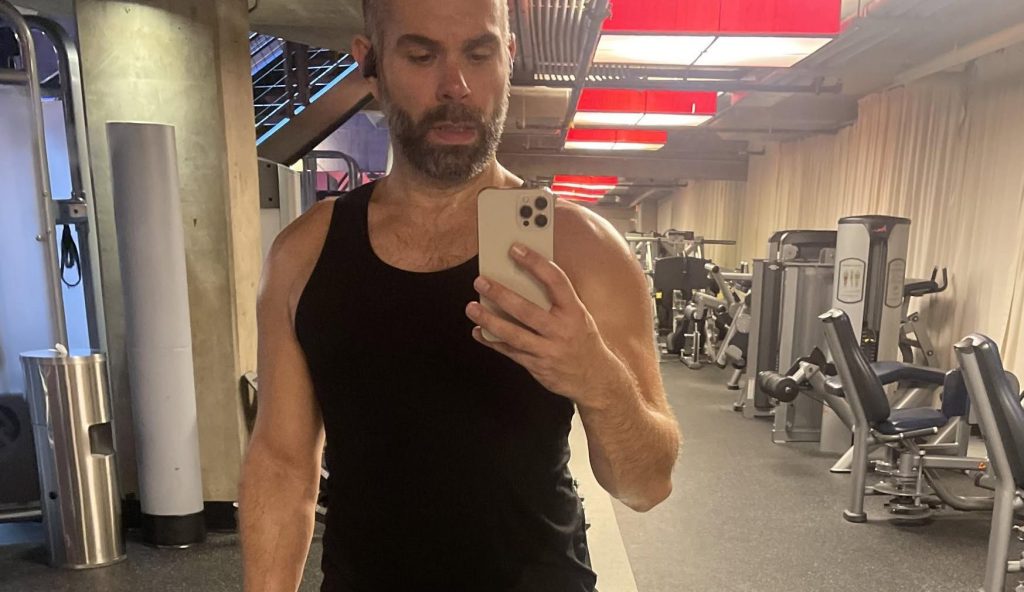
Dr. Matt Lambert spent years fighting over water damage and mold inside his Washington, D.C., condominium. He filed a lawsuit, documented his grievances online, and repeatedly identified where building manager James Stuart could be found. On November 12, 2026, Stuart was shot dead. The details emerging from the court records and earlier interviews raise disturbing questions about what happened before the attack.
James Stuart went to the gym Thursday morning.
By 8 a.m., he was dead.
The 46-year-old building manager was shot and killed inside VIDA Fitness in Washington, D.C.’s Logan Circle neighborhood. Four other people were wounded, including construction workers outside the building.
Police identified the gunman as Dr. Matt Lambert, 55, a physician and resident of the condominium building above the gym.
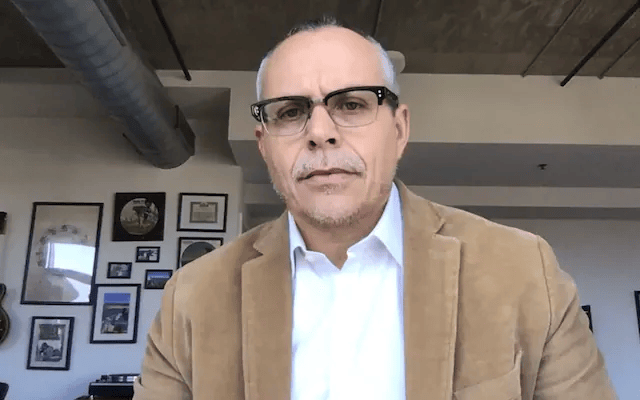
Dr. Matthew Lambert
Investigators believe Stuart was specifically targeted.
But here’s what makes this story so disturbing.
Nearly a year before the shooting, Lambert told a journalist that Stuart regularly came to the gym around 8 a.m.
Months later, an X account associated with Lambert again directed people looking for the building manager to the gym.
And Stuart wasn’t just someone Lambert had complained about.
He had provided testimony in Lambert’s ongoing lawsuit against the condominium association.
Those details are now part of a much larger question: Was this an attack that developed out of a prolonged personal grievance, and were there warning signs anyone could reasonably have recognized before it happened?
The man at the center of the dispute
James Stuart worked as a property manager at the Metropole condominium building, which sits above VIDA Fitness.
He was also involved in an increasingly contentious lawsuit brought by one of the building’s residents.
According to court records reviewed by City Cast DC, Stuart had provided testimony concerning Lambert’s complaints about water intrusion and mold, management’s response, and communications involving the condominium board, engineers and contractors.
That matters.
Stuart wasn’t merely an employee who happened to work in the same building as Lambert. He had firsthand involvement in the very dispute investigators now believe was connected to his killing.
But there’s an important distinction: being involved in litigation does not establish why someone was targeted. Police are still investigating the precise sequence of events and Lambert’s preparations.
Stuart’s own story has received far less attention than the gunman’s grievances.
His life, the people who knew him, and the impact of his death deserve to be part of this investigation—not an afterthought.
A $1.1 million penthouse and a dispute that consumed everything
Lambert purchased his seventh-floor penthouse at the Metropole in 2016 for approximately $1.1 million.
In 2024, he began documenting what he said was extensive water damage following exterior renovation work on the building.
His complaints included moisture entering around windows, peeling paint, damaged walls and mold.
According to the lawsuit he filed in March 2025, the problems became so extensive that he hired contractors to remove drywall and flooring.
City Cast DC’s examination of the complaint describes a series of alleged failures.
In August 2024, the condominium association opened part of his drywall to investigate a leak.
By September, Lambert claimed an electric window blind beneath the opening had shorted out. He also reported visible and detectable mold.
He requested additional testing, removal of damaged materials, remediation and a repair plan.
According to his complaint, two independent assessors documented elevated moisture and mold.
In November 2024, contractors Lambert hired reportedly uncovered additional problems, including leaking pipes associated with the building’s fire-suppression system.
Lambert alleged he could not safely rebuild the apartment while moisture continued entering it.
He eventually sought $1 million in damages.
But the condominium association and property management company disputed responsibility.
The association also raised the possibility that ventilation or laundry equipment associated with VIDA Fitness contributed to the moisture problems. The gym’s operators and commercial property owners denied that explanation.
In other words, the source of the damage and responsibility for fixing it remained contested.
The civil case had not been resolved when Stuart was killed.
The journalist who interviewed Lambert before the shooting
One of the most revealing accounts comes from journalist Michael Brice-Saddler, who interviewed Lambert repeatedly in late 2025 while investigating the condominium dispute.
Brice-Saddler visited Lambert’s stripped-down penthouse twice.
Lambert told him that the conflict had affected his sleep, eating habits and daily life.
He said he had spent nearly $200,000 on legal and engineering costs by December 2025, including money borrowed against his retirement savings.
His attorney later estimated that the costs had climbed to approximately $300,000.
Lambert also described taking extraordinary measures to challenge the building’s explanation for the moisture.
After engineers suggested his own appliances could be responsible, he said he stopped using his shower, heating system and dryer for months.
Instead, he showered downstairs at VIDA Fitness.
That detail is significant because the gym was not an unfamiliar location to Lambert.
It was part of his routine, part of his dispute, and eventually the scene of Stuart’s killing.
Brice-Saddler described a whiteboard inside the condominium where Lambert tracked his grievances.
Lambert distributed flyers around the neighborhood, invited other residents to see his damaged apartment and created an anonymous X account called Of Mice and Mold.
He acknowledged that his public messaging had become increasingly aggressive.
The reporter also described Lambert referring to Luigi Mangione, the man accused of killing UnitedHealthcare CEO Brian Thompson, while criticizing the condominium association’s legal tactics.
But Brice-Saddler made one thing clear: during their interviews, Lambert never explicitly indicated that he intended to resort to violence.
That distinction matters when examining possible warning signs.
He knew Stuart’s gym routine
During a December 2025 visit to Lambert’s apartment, another resident complained about difficulty contacting the building manager.
Lambert responded by explaining that Stuart regularly came to the gym around 8 a.m.
At the time, it was presented as information about where an employee could be reached.
But the social media record adds another layer.
On April 28, 2026, the X account associated with Lambert commented on another resident’s maintenance complaint.
The account suggested that anyone looking for the building manager should check the gym.
Then, on May 19, the same account described an encounter with Stuart at the gym involving questions about an audit connected to the lawsuit.
And on November 12, shortly before 8 a.m., Stuart was shot and killed inside that gym.
Consider that sequence.
Lambert had discussed Stuart’s gym routine with a journalist.
The account associated with him subsequently referenced finding Stuart there.
The account later described confronting him there about the dispute.
Months afterward, police say Lambert entered the gym and killed him.
None of those earlier statements independently establishes that Lambert was planning a shooting at the time.
But together, they provide a documented history of his attention to Stuart and the location where the attack eventually occurred.
That history deserves close examination alongside the complete social media archive, litigation communications and any previously reported threats.
The post published as the shooting began
At approximately 8:06 a.m. Thursday, an account associated with Lambert published screenshots of an engineering report concerning the condominium’s water damage.
The post introduced the document as a manifesto.
The timing is extraordinary.
Police received the first shooting call just before 8 a.m.
But the post raises questions that cannot be answered from its timestamp alone.
Was it written in advance? Was it scheduled? What did the full engineering report contain?
Earlier posts from the account described an independent engineering report concerning Lambert’s Unit 704, the broader facade rehabilitation and other affected condominiums.
That last detail is particularly interesting.
If other units experienced similar problems, the underlying engineering records could help establish whether Lambert’s complaints reflected a broader building issue.
The report itself, however, does not establish anything about his mental state or intention to commit violence.
What happened inside VIDA Fitness
According to Metropolitan Police, Lambert entered VIDA Fitness shortly before 8 a.m. and shot Stuart with a handgun.
Gym owner David von Storch told The Washington Post that security footage captured the killing.
Lambert then returned to his seventh-floor condominium.
From his balcony, police say, he used a rifle to shoot at people below.
Four additional victims were wounded: two men and two women. One was reported in critical condition Thursday afternoon, while three others sustained injuries described as non-life-threatening.
Police recovered three firearms: a handgun, a rifle and a shotgun.
Investigators also found gasoline and other flammable materials inside Lambert’s apartment.
Police said he had spread an accelerant, damaged a natural gas line and started a fire. The building’s sprinkler system helped contain the flames.
During the standoff, officers reported that Lambert fired through his apartment door.
Negotiators communicated with him for approximately an hour before he fatally shot himself.
The presence of multiple weapons and preparations involving fire raises serious questions about how far in advance the attack was planned.
Police have not publicly established a complete preparation timeline.
A phone call after the shooting
One of the most consequential details emerged from another building manager, Charelle Ferguson.
Ferguson told The Washington Post that she spoke with Lambert by telephone around 9 a.m., after the shooting had begun.
She said Lambert complained about the mold and water damage in his apartment and suggested that taking action was the only way to get people’s attention.
According to Ferguson, he then acknowledged shooting five people.
She attempted to keep him calm while speaking with him.
This account is particularly important because it connects Lambert’s stated grievances to the violence through a reported conversation during the incident—not merely through speculation after his death.
The full conversation, including any recording, would be important evidence for investigators.
The contradiction in his final days
Another detail makes the timeline more complicated.
Lambert’s attorney, Joel Braithwaite, said he had spoken with his client two days before the shooting.
According to Braithwaite, Lambert seemed optimistic about the direction of the lawsuit.
He was also reportedly preparing to start a new job the following Monday.
A deposition had taken place the previous week, and his attorney believed the case was progressing.
That doesn’t tell us what Lambert was thinking privately.
But it complicates the simple narrative that a man suddenly became violent because his legal options had run out.
The identity of the person deposed in early November, the substance of that testimony and any communications that followed are all important unanswered questions.
Did black mold affect his behavior?
As news of the lawsuit spread, speculation emerged about whether exposure to black mold could have caused hallucinations or contributed to Lambert’s behavior.
There is a scientific distinction worth making.
Damp indoor environments and mold can contribute to respiratory symptoms, allergic reactions and other health complaints.
However, ordinary household mold exposure has not been established as a cause of hallucinations, psychosis or homicidal violence.
And there is currently no verified public evidence that Lambert was experiencing hallucinations.
The condition of his condominium may have been genuinely distressing. The legal dispute may have consumed enormous financial and emotional resources.
Neither fact establishes a medical explanation for killing another person.
We can investigate the mold allegations without turning them into an unsupported explanation for the shooting.
What investigators still need to establish
The most important questions now concern evidence that existed before November 12.
What exactly did James Stuart say in the civil litigation?
Did the parties exchange emails that document escalating confrontations?
Who was deposed during the week before the shooting?
Did Lambert make any direct threats against Stuart or anyone else?
Were concerns about his behavior ever reported to police, building management or other authorities?
And when did he obtain the weapons and flammable materials used during the attack?
Those answers could help distinguish between troubling statements that only became significant afterward and specific warnings that might reasonably have prompted intervention.
The original engineering report also deserves examination, not because it excuses the violence, but because it could establish what was actually happening inside the building.
The story cannot end with the gunman
There is something deeply unsettling about the amount of documentation Lambert left behind.
The lawsuit.
The engineering reports.
The social media account.
The photographs of his damaged apartment.
The interviews with a journalist.
The references to Stuart’s gym routine.
Investigators now have an extensive record of the dispute that preceded the shooting.
But we should be careful about what that record means.
An angry complaint is not necessarily a threat. An unusual social media post is not necessarily a warning of violence. And a legitimate grievance does not excuse murder.
The question is whether the evidence reveals a point when Lambert’s behavior moved beyond a bitter legal dispute into a recognizable danger to another person.
That is what investigators must establish.
And while the public examines the doctor’s finances, apartment and state of mind, James Stuart’s name deserves to remain at the center of the story.
He was 46 years old.
He was a building manager whose work placed him directly inside a dispute he did not create.
On Thursday morning, he was killed at the gym.
Four other people were wounded.
Whatever the engineering report eventually proves about the building, it cannot explain away what happened to them.
And that is where this investigation must begin—and where accountability matters most.
WET Investigations is continuing to examine the publicly reported court records, social media timeline and statements concerning the November 12 shooting. The original deposition transcript, complete engineering report and private communications between Lambert and Stuart have not been independently obtained by WET. This article will be updated as additional verified information becomes available.
Sources and further reading
- The Washington Sun — Michael Brice-Saddler’s firsthand interviews with Matt Lambert
- The Washington Post — Lambert’s dispute, James Stuart and the reported phone call
- City Cast DC — James Stuart’s involvement in the lawsuit and the social media timeline
- City Cast DC — Examination of the condominium complaint and water-damage allegations
- CBS News — Police chronology, firearms, injured victims and attorney statements
- National Institute of Environmental Health Sciences — Mold and health


Leave a Reply