
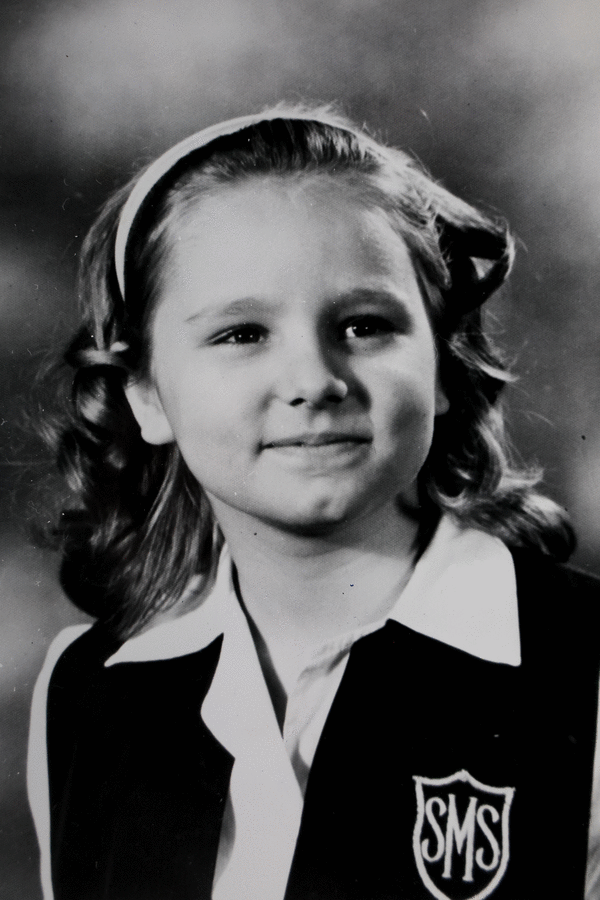
Gloria Kowalewicz disappeared during a three-and-a-half-block walk to church in 1960. The man Chicago police now identify as her killer went on to investigate murders and sex crimes, collect professional commendations, and retire twice. A fingerprint preserved for decades would eventually help expose him.
By Wait, Explain That? | October 14, 2026
Her Name Was Gloria.
Before her name became attached to one of Chicago’s most haunting cold cases,
Gloria Kowalewicz was an eight-year-old girl with a family, a school, a church, and an
entire life ahead of her.
She was a daughter. A big sister. A third-grader who had recently celebrated her First Holy Communion.
In 1960, Gloria lived in Chicago’s West Englewood neighborhood with her parents, Edward and Esther Kowalewicz, and her baby brother, Adam.
Her father, a World War II veteran, operated a gas station at 63rd Street and Hoyne Avenue. Her little brother had been born only a few months earlier.
Gloria attended St. Mary of Mount Carmel, where her school and church were less than half a mile from home.
She had recently received her First Holy Communion, a milestone in her Catholic faith. Afterward, a nun encouraged Gloria and her classmates to receive Communion every day for two weeks to help them remember its significance.
Gloria had been following those instructions.
Saturday, November 12, 1960, was the final day.
She had just one more trip to make.
Three and a half blocks.
She never arrived.
The Last Time Her Mother Saw Her
That Saturday morning, Gloria’s father needed the family car.
Instead of getting a ride to church, she would walk.
Esther helped her daughter get dressed in a pink-and-brown checkered dress and a blue leotard.
Before Gloria left, her mother kissed her goodbye.
Then Esther stood on the family’s porch and watched her daughter walk north along Damen Avenue.
Gloria turned east onto Marquette Road, passed a gas station, and disappeared from view.
That was the last time Esther Kowalewicz ever saw her daughter alive.
Somewhere along that short walk, Gloria encountered the person who would take her life.
Investigators have never publicly established exactly where the abduction occurred, what was said, or how her killer gained control of her.
We don’t know whether Gloria recognized him, whether he approached her with a story, or whether she was forced into a vehicle.
What we do know is that she left home expecting to return.
And within hours, her family would receive devastating news.
A Little Girl in the Woods
Shortly before noon, more than 15 miles southwest of Gloria’s neighborhood, a laundry-company driver stopped along 104th Avenue, approximately one mile south of Illinois Route 83, near Palos Park.
He was eating lunch and reviewing his route when something caught his attention in a wooded ravine approximately 20 feet from the roadway.
Pink-and-brown fabric.
As he approached, he realized it was a child’s dress.
Then he saw the little girl.
The driver checked for a pulse. Finding none, he drove to a nearby tavern to contact authorities.
It was Gloria.
She had been shot twice in the head.
Investigators also documented bruising around her neck. Evidence at the scene indicated she had been killed in the wooded area rather than simply left there after death.
Her blue leotard had been removed and was found beneath her body.
Her shoes and white First Communion purse were nearby.
Her coat was recovered several miles away.
Police collected a bullet, clothing, fingerprints, and other evidence. They examined tire impressions and searched the surrounding area. Divers later searched nearby waterways for the murder weapon.
Among the fingerprints preserved were those recovered from Gloria’s Bible and the strap of her Communion purse.
Those prints would eventually become crucial.
But in 1960, investigators had no idea whose fingerprints they were.
Gloria’s father was called to identify his daughter.
The little girl who had kissed her mother goodbye that morning was not coming home.
The Investigation That Consumed Chicago
Gloria’s murder shook the community.
Police launched an extensive investigation, canvassing neighborhoods, questioning residents, and following leads involving men with histories of sexual offenses.
Firefighters, veterans, Boy Scouts, and community volunteers assisted in the search.
Investigators interviewed more than 1,300 people.
Several witnesses reported seeing a girl resembling Gloria with a man estimated to be between 25 and 40 years old shortly after she disappeared.
The descriptions were leads, not positive identifications.
Despite the scope of the investigation, police could not identify her killer.
At the time, investigators also believed Gloria had not been sexually assaulted.
But something preserved on her clothing would eventually tell a different forensic story.
Decades later, laboratory testing detected semen on her dress.
That biological evidence would ultimately identify a man who had escaped suspicion for more than six decades.
And the discovery would reveal something almost impossible to comprehend.
The man police identified as Gloria’s killer had been a Chicago police officer.
A Funeral Escorted by the Chicago Police Department
On November 16, 1960, four days after Gloria’s murder, more than 1,000 people gathered for her funeral at St. Mary of Mount Carmel Church.
Six of Gloria’s fellow third-grade communicants served as pallbearers.
Children who had recently celebrated their First Communion alongside her were now helping carry her coffin.
The Chicago Police Department provided an escort.
During the funeral, the Rev. Angelo Della Vecchia spoke emotionally about the need for public officials to protect the city’s residents and make Chicago safer.
A grieving community wanted answers.
They wanted someone held responsible.
What nobody knew was that a member of the police department was the person investigators would eventually identify.
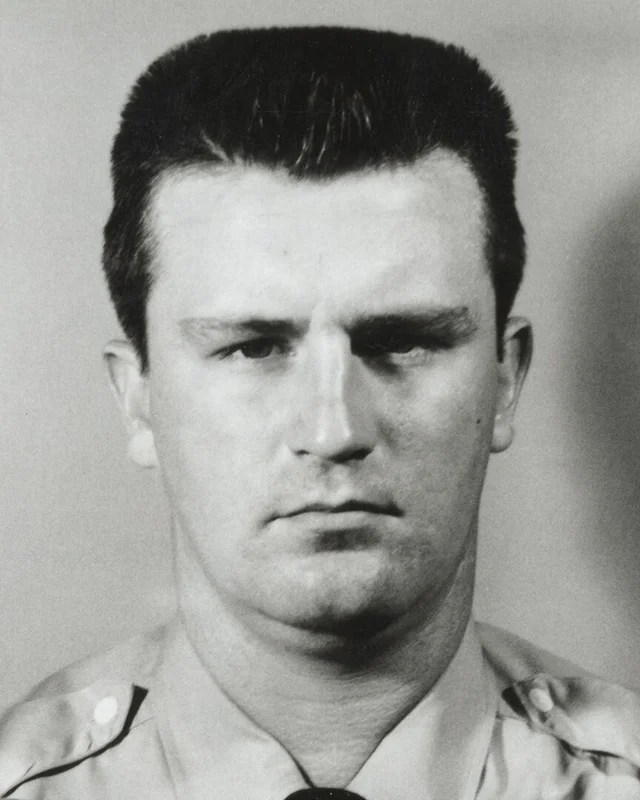
Thomas Francis McInerney Jr. had joined the Chicago Police Department the previous year.
There is no publicly established evidence that McInerney attended Gloria’s funeral or participated in the police escort. Nor has it been established that he worked on the original investigation.
But while Gloria’s family buried their daughter, McInerney remained an active Chicago police officer.
His career was only beginning.
The Officer Nobody Suspected
Thomas Francis McInerney Jr. was born in Chicago on November 15, 1935.
His parents were Thomas F. McInerney Sr. and Winifred Norton McInerney.
According to census records examined by the Chicago Tribune, his parents lived at 6557 South Laflin Street in 1950.
Their home was approximately three-quarters of a mile from Gloria’s family home.
McInerney’s father worked as a guard at the Chicago House of Correction.
That creates a documented neighborhood connection between their families a decade before the murder. It does not independently prove where Thomas Jr. was living in November 1960.
McInerney served in the U.S. Army as a paratrooper before joining the Chicago Police Department in 1959.
He was 24 years old when Gloria was killed, three days short of his 25th birthday.
At the time, he was a patrol officer assigned to Chicago’s West Side.
In 1964, he became a detective.
Over the years, his assignments included burglary investigations, vice, gangs, homicide, sexual offenses, and violent crimes.
Consider the contradiction.
The man Chicago police now identify through DNA and fingerprint evidence in the murder of an eight-year-old girl would later spend years investigating serious crimes, including murders and sexual offenses.
He remained with the Chicago Police Department until 1987.
Twenty-eight years of service.
His obituary later celebrated numerous professional commendations.
But his career in criminal investigations didn’t end with his police retirement.
McInerney subsequently worked as an investigator for the Federal Public Defender’s Office in Reno and Las Vegas, Nevada.
In 2003, he received recognition as an Outstanding Federal Defender Investigator.
He retired again in 2004.
On August 30, 2006, McInerney died in Las Vegas at the age of 70.
His obituary described his military service, investigative career, wife Kathy Atkinson-McInerney, five children, a stepson, and grandchildren.
It presented the life of a man whose professional accomplishments were remembered and celebrated.
But that obituary couldn’t tell the whole story.
Because the evidence collected from Gloria’s body and belongings in 1960 was still waiting to reveal his name.
Two Lives. Two Very Different Endings.
While McInerney continued his career, Gloria’s family lived with a loss that never went away.
Her father, Edward, died in 1978.
Her mother, Esther, died in 2000.
Neither parent lived long enough to learn who had killed their daughter.
Gloria’s younger brother, Adam, was only an infant when she disappeared.
He grew up in a family forever changed by a murder that remained unsolved.
For decades, there was no arrest, no conviction, and no answer to the question of why Gloria had been taken.
McInerney lived another 46 years after Gloria’s death.
Gloria never reached her ninth birthday.
She never had the opportunity to grow up, finish school, choose a career, or decide what kind of life she wanted.
Her family never got to discover the person she would have become.
And while all those years passed, investigators continued to preserve the evidence from her murder.
Eventually, that evidence would speak for her.
2010: The Evidence Reveals Something New
In July 2010, Chicago police used grant funding to submit Gloria’s dress for modern DNA testing.
Fingerprints recovered from her purse strap and Bible were also submitted for examination.
Approximately five months later, laboratory analysis identified a male DNA profile from semen recovered from the dress.
That discovery was significant.
For the first time, investigators had a biological profile that could potentially identify the donor.
The profile was submitted to CODIS, the FBI’s national DNA database.
Investigators pursued potential leads, but further testing eliminated the individuals they examined.
The case remained unsolved.
For another 14 years, Gloria’s identity as a victim was known.
Her killer’s identity was not.
Then investigators turned to a forensic technique that had transformed cold-case investigations around the country.
Investigative genetic genealogy.
2024: A New Search for the Truth
In 2024, Chicago police used funding from a sexual-assault-kit initiative to submit Gloria’s coat to the FBI for investigative genetic genealogy.
Unlike a conventional DNA database search, genetic genealogy can help investigators develop leads through genetic relationships and family trees.
The approach had been used in other major cold-case investigations, including the identification of the Golden State Killer.
The publicly reported forensic history distinguishes the semen profile developed from Gloria’s dress in 2010 from the later submission of her coat in 2024.
The available reporting does not fully explain every laboratory step connecting those submissions to the final identification.
What investigators have publicly established is the result.
In July 2026, Thomas Francis McInerney Jr. was positively identified as the donor of the semen recovered from Gloria’s dress.
And DNA was not the only evidence.
The Fingerprint That Had Been Waiting Since 1960
After the genetic identification, investigators revisited a fingerprint preserved from the strap of Gloria’s white Communion purse.
They retrieved McInerney’s 1959 Chicago Police Department employment application.
The fingerprints matched.
The significance is extraordinary.
McInerney had submitted his fingerprints when he joined the department, before Gloria was murdered.
Investigators had recovered a fingerprint from her purse in 1960.
More than six decades later, those two records helped establish his identity in the case.
Police also determined that McInerney had owned three Colt revolvers of the general type associated with the firearm evidence from Gloria’s murder.
Authorities have not publicly established a conclusive match between the crime-scene bullet and any particular gun he owned.
But the forensic findings led Chicago police to conclude that McInerney was responsible for Gloria’s death.
The answer the Kowalewicz family had waited decades to receive was finally here.
Their daughter’s killer, according to police, had spent 28 years wearing a badge.
And he had died 20 years before investigators identified him.
October 2026: The Truth Finally Comes Out
On October 12, 2026, the Chicago Police Department publicly identified McInerney in Gloria’s murder.
The news spread quickly.
A retired detective who had investigated homicide and sex crimes had been identified as the killer of an eight-year-old child.
Chicago Police Chief of Detectives Kevin Bruno acknowledged how deeply troubling the discovery was for the department.
He praised the investigators who had worked on Gloria’s case over the decades, while emphasizing that police would not minimize the fact that McInerney had been one of their own.
The department’s conclusion was clear: McInerney was responsible for Gloria’s death.
Because he died in 2006, he could never be arrested, prosecuted, or tried.
The investigation had produced an answer.
It could not produce a conviction.
The Cook County State’s Attorney’s Office began identifying cases McInerney may have worked on during his police career.
The FBI also continued pursuing additional investigative leads.
However, investigators have not publicly established that McInerney committed another murder, and Chicago police said he was not currently suspected in other crimes.
That distinction matters.
The revelation is disturbing enough without inventing additional victims.
But his identification raises legitimate questions about the career he led, the evidence investigators preserved, and whether earlier investigative opportunities were missed.
What Gloria’s Brother Said
For Adam Kowalewicz, learning the killer’s identity brought relief and a kind of closure his parents never experienced.
He spoke with the Chicago Tribune following the breakthrough and expressed shock that the man responsible had been a police officer.
Adam also praised the cold-case investigators who continued working on his sister’s murder.
And he shared what the identification meant for his family:
“Now I know my mom and dad’s souls can rest,” he said. “Gloria can rest.”
But knowing who killed Gloria cannot undo what happened.
McInerney lived long enough to finish two careers and die without facing trial.
Gloria’s parents spent the rest of their lives not knowing who took their daughter’s life.
Adam finally received an answer.
His mother and father never did.
And the question of why Gloria was targeted remains unanswered.
The Questions We Still Need Answered
The identity of Gloria’s killer is no longer a mystery to investigators.
But this case has left questions that deserve more than a passing mention in a news cycle.
Why wasn’t McInerney identified earlier?
A fingerprint from Gloria’s purse was preserved in 1960.
McInerney had submitted his fingerprints with his police employment application in 1959.
Was a comparison ever attempted before 2026?
If not, why not?
Investigators have not publicly provided a complete account of when his employment fingerprints were first considered or what prevented an earlier identification.
That is not proof that a particular detective made a mistake. It is a question about the history of the investigation that deserves a documented answer.
What do his complete police records reveal?
McInerney’s obituary refers to commendations.
But what about his disciplinary history, personnel evaluations, transfers, and any complaints that may have been filed against him?
We have not established a complete public record of his conduct throughout his 28 years with the Chicago Police Department.
It would be wrong to suggest misconduct complaints existed without evidence.
It would be equally wrong to assume there were none simply because his obituary celebrated his career.
Was McInerney ever involved in Gloria’s original investigation?
There is currently no verified evidence that he was.
We also have not established whether he attended her funeral, participated in the police escort, or knew any members of the Kowalewicz family.
Those are questions—not findings.
Which cases did he personally investigate?
McInerney worked in homicide, sexual offenses, and violent-crime investigations.
Authorities have indicated they are identifying cases he may have handled.
The public deserves to know what that review reveals.
Not because every crime he investigated should automatically be considered suspicious.
But because police have identified him through forensic evidence in the murder of a child, and the integrity of relevant historical investigations merits careful review.
And why Gloria?
Cold-case investigators say there is no known evidence of prior contact between McInerney and Gloria.
Did he already know the neighborhood?
Was she targeted because she happened to be walking alone?
Did his status as a police officer play any role?
There are no established public answers.
And until evidence supports one, none should be presented as fact.
These are the questions that remain after the extraordinary headline fades.
And they are exactly the questions Wait, Explain That? believes are worth asking.
Before There Was a Cold Case, There Was Gloria
Thomas Francis McInerney Jr. lived to be 70 years old.
He served in the military, spent 28 years in the Chicago Police Department, investigated serious crimes, worked as a federal investigator, received professional honors, and retired twice.
Gloria Kowalewicz lived only eight years.
She was a daughter, a sister, a student, and a little girl proud of her First Holy Communion.
Her parents buried her.
Her classmates helped carry her coffin.
Her baby brother grew up without her.
And the person police have identified as her killer was never brought before a court.
It is easy to become absorbed by the revelation that McInerney was a police officer.
By his career.
By the fingerprint.
By the decades of unanswered questions.
But the most important person in this story was never Thomas McInerney.
It was Gloria.
Because before she was a cold case, before there was a DNA profile, and before a fingerprint finally revealed the truth, there was an eight-year-old girl getting ready for church.
A third-grader.
A daughter.
A big sister.
A little girl whose mother kissed her goodbye and watched her walk away.
Her name was Gloria Kowalewicz.
She was eight years old.
And she deserved a lifetime.
Wait, Explain That? investigates true crime, overlooked evidence, and the questions that remain after the headlines fade.
The Investigation Continues
The man identified as Gloria Kowalewicz’s killer spent decades investigating homicides and sexual offenses. What do we know about his career, and what questions remain unanswered?
Read our companion investigation: The Detective Who Hid in Plain Sight: What Else Don’t We Know About Thomas McInerney?
Reporting and Sources
This article is an independently written synthesis of publicly available reporting, law-enforcement statements, historical records cited by journalists, and a published obituary. WET has not independently obtained the original Chicago Police Department investigative file or interviewed the Kowalewicz family.
- Chicago Tribune, Sam Charles, October 13, 2026: Detailed reconstruction of Gloria’s final morning, the original investigation, funeral, forensic testing, McInerney’s police assignments, and an interview with her brother Adam. https://www.arcamax.com/currentnews/newsheadlines/s-4319650
- Associated Press, October 13, 2026: Police identification, forensic conclusions, McInerney’s career, and the review of additional investigative leads. https://apnews.com/article/8566bdef2660bad4a0033129a0181afc
- CBS News Chicago, October 12, 2026: Initial public announcement and police reporting. https://www.cbsnews.com/chicago/news/former-chicago-police-officer-killer-cold-case-murder-gloria-kowalewicz/
- Chicago Tribune obituary, September 6, 2006: McInerney’s military service, police and federal investigative careers, retirement, professional recognition, and family. https://www.legacy.com/us/obituaries/chicagotribune/name/thomas-mcinerney-obituary?id=2466817
Reporting note: Chicago police identified McInerney through forensic evidence after his death. He was never tried or convicted in Gloria’s murder. No additional homicide has been publicly linked to him through a confirmed forensic identification as of October 14, 2026.


Leave a Reply